
How Do Smartwatches Work? A Plain-English Breakdown
From heart-rate sensors to GPS chips, here’s exactly what happens inside your watch every time it buzzes.
So, how do smartwatches work, really? Underneath that small, glass-topped case sits a surprisingly busy little computer. As an Amazon Associate, Syed Shoppe earns from qualifying purchases, and this guide is completely free to read regardless of whether you ever click a link. Meanwhile, a cluster of optical sensors, a tiny battery, a Bluetooth radio, and sometimes a GPS chip all work together every second your watch is on your wrist. Consequently, understanding those pieces makes the specs on any product page far less mysterious. According to the official IP Code standard, even “waterproof” claims follow strict, testable rules — and that’s just one small piece of the puzzle.
What's Covered in How do Smart Watches Work Guide
What's Actually Inside a Smartwatch?
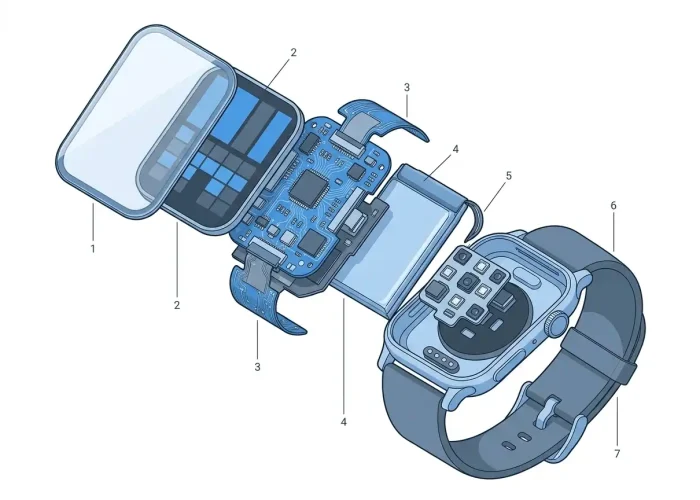
Every smartwatch packs the same basic organs as your phone. Therefore, it helps to see the full parts list first. A typical modern watch contains an optical heart-rate sensor, an accelerometer, and a gyroscope. It also holds a barometric altimeter, a Bluetooth radio, and a small lithium-ion battery. A low-power processor ties every one of those parts together.
The Core Sensor Stack
Higher-end models add extra hardware on top of that base kit. A temperature sensor, an SpO2 sensor, and ECG electrodes often join the mix. Additionally, all of this hardware runs on a stripped-down operating system. Wear OS, watchOS, and manufacturer-built firmware all share one goal. Each one is built to sip battery power rather than gulp it. As a result, a tiny screen can still track dozens of data points daily. That’s the real answer to how do smartwatches work at the hardware level.
How Do Smartwatches Connect to Your Phone?
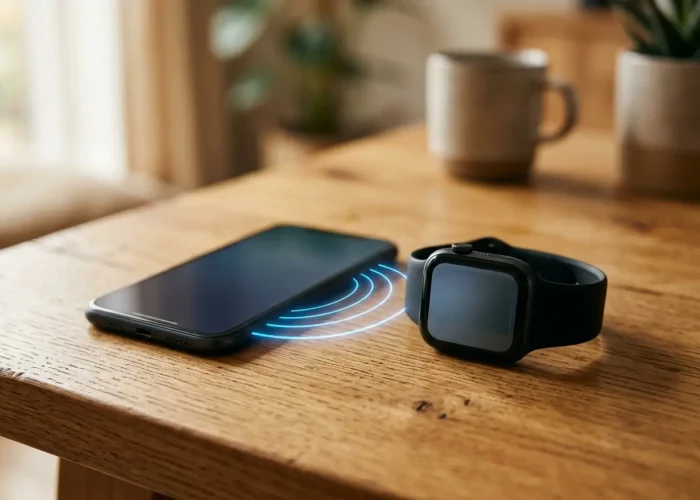
Some models add Wi-Fi for faster syncing when your phone is out of range. Premium tiers go further and include an LTE chip for true independence. Notably, pairing itself usually takes under a minute to complete. Open the companion app, tap “add device,” and confirm a code on both screens. From there, the phone and watch stay quietly linked until you walk away.
Bluetooth, Wi-Fi, and Cellular Explained
Some models add Wi-Fi for faster syncing when your phone is out of range. Premium tiers go further and include an LTE chip for true independence. Notably, pairing itself usually takes under a minute to complete. Open the companion app, tap “add device,” and confirm a code on both screens. From there, the phone and watch stay quietly linked until you walk away.
How Does a Smartwatch Track Your Heart Rate and Oxygen?
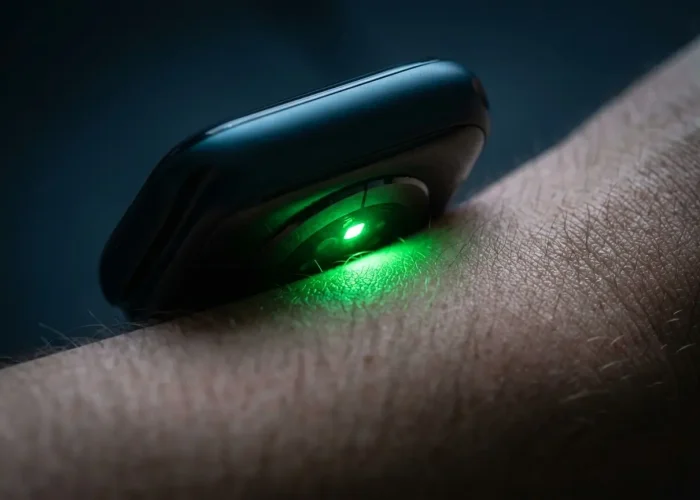
Flip any smartwatch over, and you’ll spot a small cluster of LEDs. That’s the photoplethysmography, or PPG, sensor doing its job. These LEDs shine light into the capillaries just under your skin. A photodiode then measures how much of that light bounces back. Blood absorbs more light with every heartbeat, so brightness dips slightly each time. The sensor calculates your pulse from those tiny changes, often dozens of times per second.
Why the Numbers Aren't Always Perfect
Oxygen sensors work almost identically to heart-rate sensors. They compare red and infrared light absorption to estimate blood oxygen saturation. However, accuracy isn’t perfect on either front. A wrist-monitor comparison published in Cardiovascular Diagnosis and Therapy found a clear pattern. Optical sensors track heart rate well at rest. They lose some precision during intense exercise, though.

How Do Smartwatches Count Steps, Calories, and GPS Distance?
Step counting relies on the accelerometer inside every watch. This chip detects the small rhythmic jolts your wrist makes with each stride. Software then filters out random arm movements like typing or waving. Only genuine walking motion gets logged as a step. Meanwhile, the gyroscope adds orientation data to the mix. That data helps the watch tell stairs from a simple arm swing.
From Footsteps to Full Routes
Calorie estimates combine movement data with your heart rate, weight, age, and sex. The result is an educated guess, not a lab measurement. GPS distance comes from a dedicated chip inside the watch. That chip pings orbiting satellites to pinpoint your location every second or two. Newer multiband GPS chips read several satellite frequencies at once. That upgrade sharply reduces route drift near tall buildings or trees. It’s a small detail, but it changes how do smartwatches work outdoors.
How Do Smartwatches Count Steps, Calories, and GPS Distance? — GPS Type Comparison
| GPS Type | How It Works | Typical Accuracy |
|---|---|---|
| Connected GPS | Uses your phone's GPS chip over Bluetooth | Good, but needs your phone nearby |
| Built-in single-band GPS | Watch has its own chip, reads one satellite frequency | Reliable outdoors, some drift near buildings |
| Built-in multiband GPS | Reads multiple satellite frequencies at once | Most precise, best in tough terrain |
How Does Sleep and Stress Tracking Work on a Smartwatch?
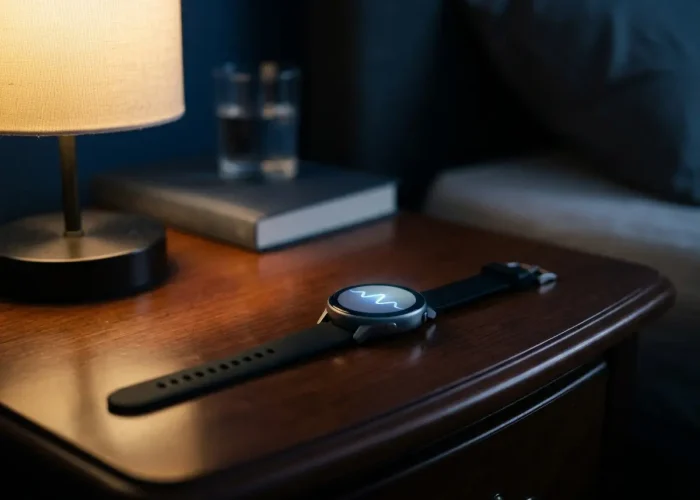
While you sleep, your watch keeps its heart-rate sensor running. It cross-references those readings against your wrist movement. Consequently, it can estimate light, deep, and REM sleep stages. It never watches actual brainwaves like a clinical sleep study would, though. Some watches add a skin-temperature sensor for extra accuracy. Body temperature naturally dips as sleep deepens.
Reading Stress From Your Heartbeat
Stress tracking borrows that same heart-rate data. It looks at heart-rate variability, the tiny gaps between individual heartbeats. A steadier, less variable rhythm often signals higher stress. A more variable pattern usually points to a relaxed nervous system. Afterward, the app translates that score into a simple color-coded chart. You don’t need a physiology degree to read it at a glance.
How Does ECG Work on a Smartwatch?
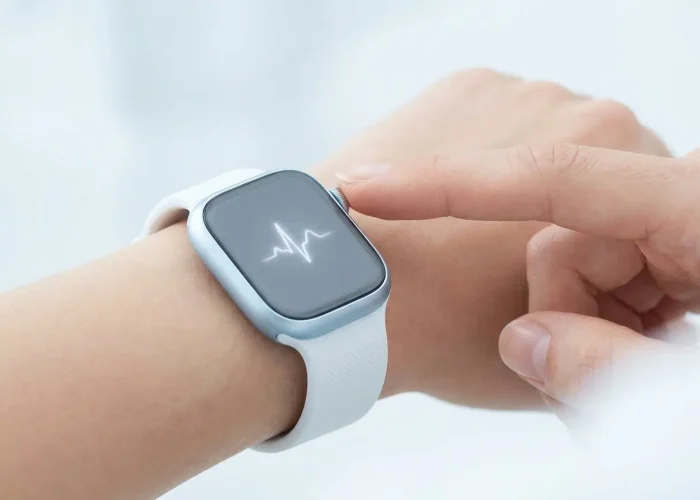
Unlike the optical PPG sensor, ECG measures real electrical activity. One electrode sits in the watch’s back case, touching your wrist. A second electrode lives in the crown or bezel. Rest a fingertip from your other hand on that electrode for 30 seconds. That contact completes a tiny electrical circuit through your chest.
What the Reading Actually Shows
That circuit lets the watch record a single-lead heart rhythm strip. It’s similar in concept to a hospital ECG, though far less detailed. Afterward, onboard software scans the reading for irregular rhythm. Atrial fibrillation is the pattern it flags most often. Still, this feature is a screening tool, not a diagnosis. Always discuss anything unusual with a real doctor.
How Does a Smartwatch Battery Work, and How Do You Charge It?
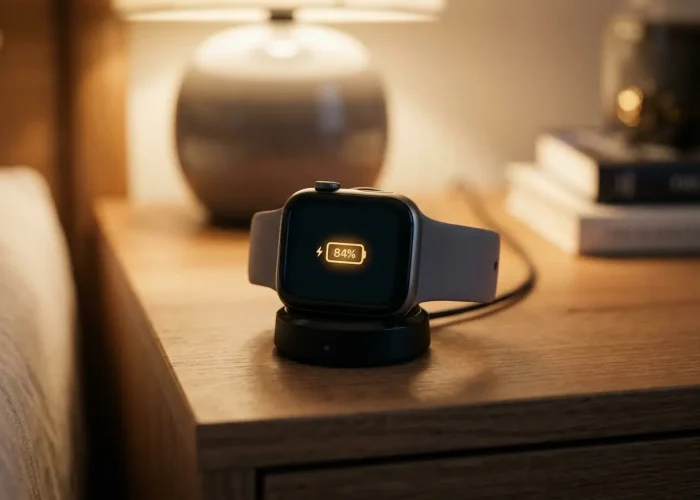
Nearly every smartwatch runs on a small lithium-ion or lithium-polymer cell, the same chemistry found in phones and laptops, just shrunk down considerably. Because the case is so compact, manufacturers squeeze every bit of efficiency out of the chip, display, and radios to stretch that tiny battery further. As a result, an always-on AMOLED screen and continuous GPS tracking drain power far faster than a simpler always-off display.
Charging almost always happens through a magnetic pogo-pin dock rather than a standard USB-C port, since smartwatches need to stay sealed against water and dust. Battery life ranges wildly by category — roughly one to two days for feature-packed models, and up to two weeks for battery-focused fitness watches.
How Do Smartwatch Notifications and Payments Work?
Notifications travel the same Bluetooth connection your watch uses for everything. Your phone forwards a short summary the instant it gets an alert. A quick wrist buzz lets you glance at it right away. You don’t need to reach for your pocket at all. Some watches even let you reply with preset quick responses.
How Tap-to-Pay Stays Secure
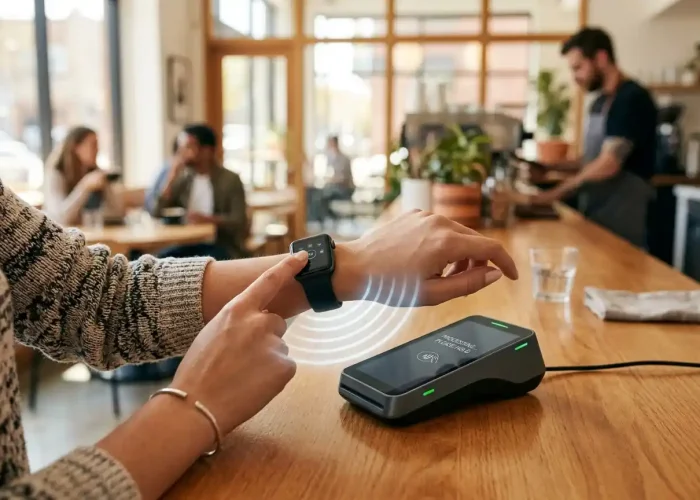
Payments run through a separate chip called NFC. NFC creates a short-range wireless handshake with a payment terminal. During setup, you store an encrypted, tokenized version of your card. Your real card number never touches the watch at all. Holding the watch near a terminal completes the transaction in seconds.
How Does a Smartwatch Stay Water Resistant?
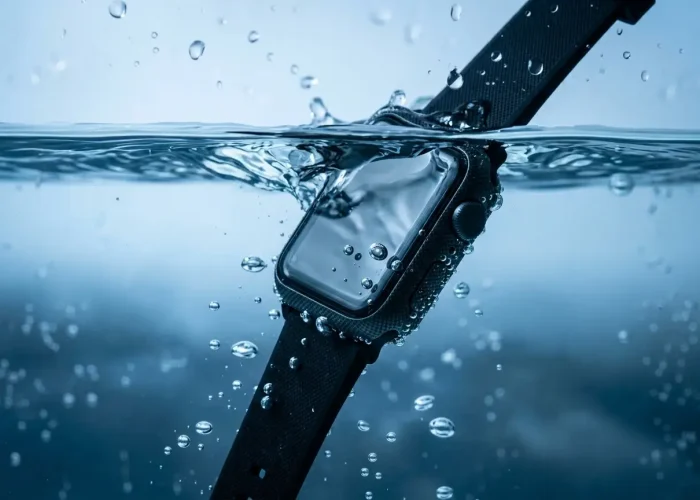
Manufacturers seal the case, buttons, and charging contacts carefully. Rubber gaskets and precision components keep water away from the electronics. Every finished watch then gets tested against the international IP standard. the official IP Code standard, assigns a two-digit rating for dust and water resistance. The second digit specifically measures how well water stays out.
Why Ratings Can Fade Over Time
A water-resistance rating isn’t permanent, though. Rubber seals gradually wear down with regular use. Hot water, chlorine, and soap degrade seals faster than fresh water does. Most brands recommend rinsing your watch after ocean swims. Avoid hot showers and saunas too, even on rated models.

Can a Smartwatch Work Without Your Phone?
Yes, though how much functionality survives depends entirely on the watch’s hardware. A Bluetooth-only smartwatch still tracks steps, heart rate, and stored workouts on its own, but loses live GPS mapping, new notifications, and any cloud-connected feature the moment it leaves phone range. Meanwhile, a watch with built-in GPS can log an entire run with an accurate route map, phone or no phone.
Only cellular (LTE) models go a full step further, letting you make calls, send texts, and stream music with zero phone nearby at all, provided you’ve activated a small monthly data plan through your carrier.
Standalone vs Bluetooth-Only Smartwatches: A Quick Comparison
| Feature | Bluetooth-Only Watch | Built-In GPS Watch | Cellular (LTE) Watch |
|---|---|---|---|
| Works away from phone | Limited — stores data only | Yes, for GPS + sensors | Fully independent |
| Live route mapping | No, needs phone nearby | Yes | Yes |
| Calls & texts without phone | No | No | Yes |
| Extra monthly cost | None | None | Small carrier data plan |
| Typical battery impact | Lowest drain | Moderate during GPS use | Highest drain when active |
Ultimately, most everyday users do fine with a Bluetooth-plus-GPS watch. However, hikers, ultra-runners, and anyone who trains far from their phone often find the LTE upgrade worth the extra line item. For a deeper side-by-side of specific models across every price point, see our best smart watches buying guide.
FAQs About How do Smartwatches Work
How does a smartwatch track your heart rate?
A smartwatch shines LED light into your wrist. It measures how much light bounces back with each heartbeat, a method called photoplethysmography (PPG). Since blood absorbs more light during a pulse, the sensor can calculate beats per minute from those tiny brightness shifts. It’s fast and convenient, though slightly less precise than a chest-strap monitor, especially during intense exercise.
Can a smartwatch work without a phone nearby?
It depends on the model. A basic Bluetooth watch still logs steps and heart rate offline. It loses live notifications and GPS mapping without your phone. Watches with built-in GPS can track an entire outdoor run independently. Cellular (LTE) models go even further. They handle calls, texts, and streaming with no phone at all, provided a data plan stays active.
How accurate are smartwatch health sensors?
Fairly accurate for everyday trends, though not clinical-grade. Optical heart-rate sensors perform well at rest, but accuracy can dip during high-intensity workouts or irregular heart rhythms. Step counts and calorie estimates are also approximations rather than exact figures. Treat the numbers as useful patterns over time, and confirm anything medically significant with a doctor.
Does a smartwatch need a cellular plan?
No, not unless you specifically buy an LTE-capable model and want to use it away from your phone. Standard Bluetooth and GPS-only smartwatches never require a data plan. They simply sync with your phone’s existing connection. Only the cellular version needs a small monthly add-on through your carrier.
How long does a smartwatch battery usually last?
It varies significantly by design. Feature-rich smartwatches with bright, always-on AMOLED screens typically last one to two days per charge. Simpler fitness-focused watches with basic displays can stretch to a week or beyond. Continuous GPS tracking, cellular use, and always-on displays are the three biggest drains.
The Bottom Line on How Smartwatches Work
So, how do smartwatches work when you boil it all down? A handful of sensors, a low-power chip, and a Bluetooth radio quietly cooperate to turn wrist movements and heartbeats into readable data. Once you understand each piece — the PPG sensor, the accelerometer, the GPS chip, the battery — every spec sheet on a product page suddenly makes far more sense. Next, put that knowledge to work by comparing real models side by side in our best smart watches guide, or start with the category overview on our smart watches hub page.