
Philips Sonicare 4100 Toothbrush Review: Best Value Sonic Brush?
The Philips Sonicare 4100 toothbrush keeps showing up on best-value lists, and for good reason. In fact, TechGearLab named it the best electric toothbrush on a budget. Meanwhile, it still packs a pressure sensor, a two-minute timer, and a claimed 14-day battery. So how does it compare with a round-head brush like the Oral-B Pro 1000? This review covers cleaning power, comfort, battery life, and running costs. Also, see our best electric toothbrush guide for more picks.
Here is the short answer. The Philips Sonicare 4100 toothbrush cleans gently yet thoroughly, and it runs a long time between charges. Therefore, it suits people who want simple, reliable sonic brushing. On the other hand, it offers only one mode, and real-world battery life often falls short of the claim.
As an Amazon Associate, Syed Shoppe earns from qualifying purchases. Also, read our affiliate disclaimer.
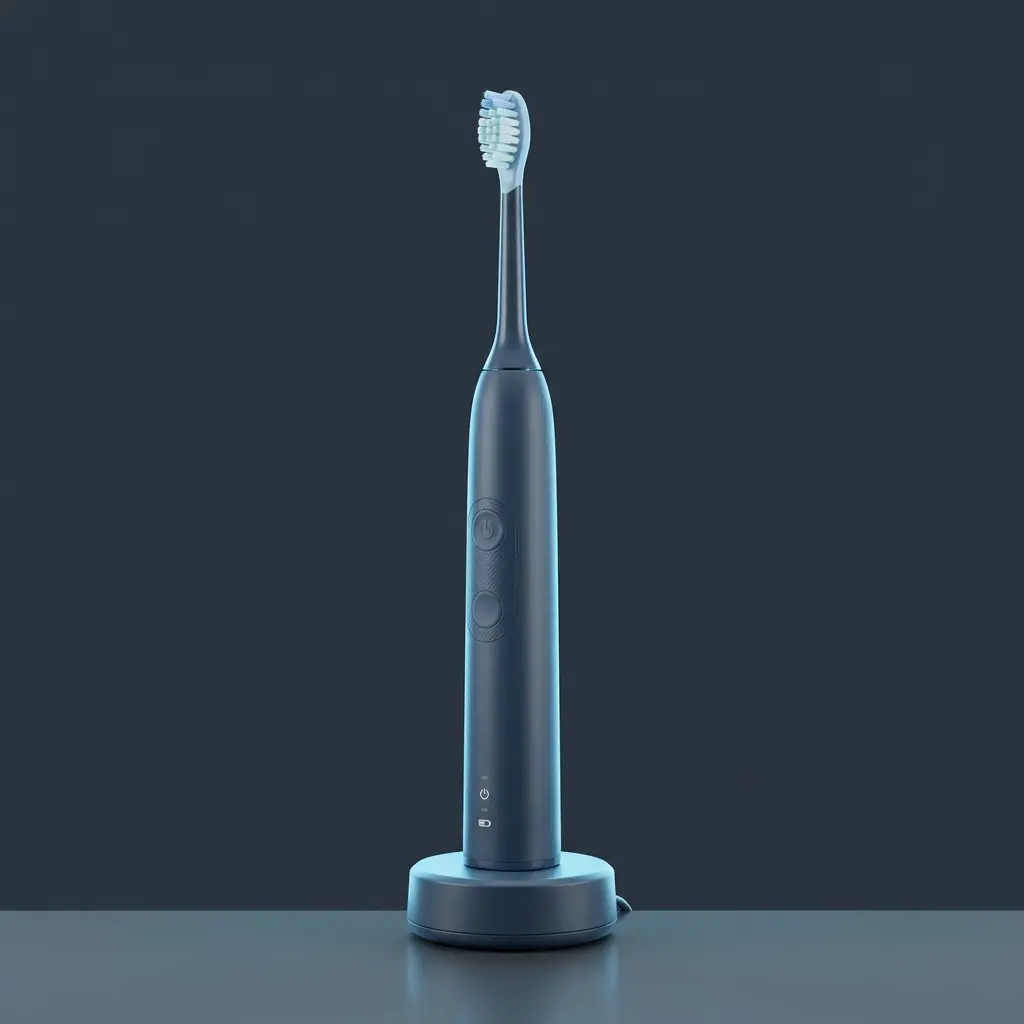
What You Will Find in This Review
Quick Verdict: Is the Philips Sonicare 4100 Toothbrush Worth It?
Overall, yes: this is our top value pick for a simple sonic brush.
Short answer: yes, if you want a gentle, proven sonic clean at a fair price. The Philips Sonicare 4100 toothbrush gives you a timer, a pressure sensor, and up to 31,000 brush strokes a minute. However, it has only one cleaning mode with two intensities, so power users may want more. Therefore, it fits simple, everyday routines best.
How we reviewed it: we used Philips specs, independent reviews, and real buyer reports. We did not run a lab test on the Philips Sonicare 4100 toothbrush ourselves. Instead, we checked each claim against outside sources. Also, this page is not dental advice, so ask your dentist about braces or gum disease.
Our Editorial Scorecard
These scores rate this brush on eight points. They come from Philips specs, expert reviews, and buyer feedback. Consequently, they show where the Philips Sonicare 4100 toothbrush shines and where it falls short.
Philips Sonicare 4100 Toothbrush Specs at a Glance
Here are the numbers that matter. Specs come from Philips, Amazon listings, and independent reviews. However, bundles and colors differ between sellers, so check your listing before you order.
Note that real-world battery life often trails the 14-day claim. In contrast, Trail and Kale reported closer to 8 to 10 days with twice-daily use. Therefore, plan to charge more often than the box suggests.
| Feature | What You Get |
|---|---|
| Cleaning action | Sonic vibration, up to 31,000 brush strokes per minute |
| Modes | 1 (with 2 intensity settings) |
| Brush head | Oblong sonic head, click-on fit |
| Timer | 2 minutes, with a QuadPacer pulse every 30 seconds |
| Pressure sensor | Vibrates and cuts power when you press too hard |
| Battery | Rechargeable; up to 14 days claimed, often 8 to 10 days in real use |
| Charge time | Up to 24 hours for a full charge |
| Weight | About 3.5 ounces with the head attached |
| Warranty | 2 years from the purchase date |
| Head fit | Sonicare click-on heads: C1, C2, C3, G2, W, and others |
| Travel case | Not included; a brush head cover ships in the box |
| ADA Seal | Not listed at the time of writing, per Forbes |
Design and What's in the Box
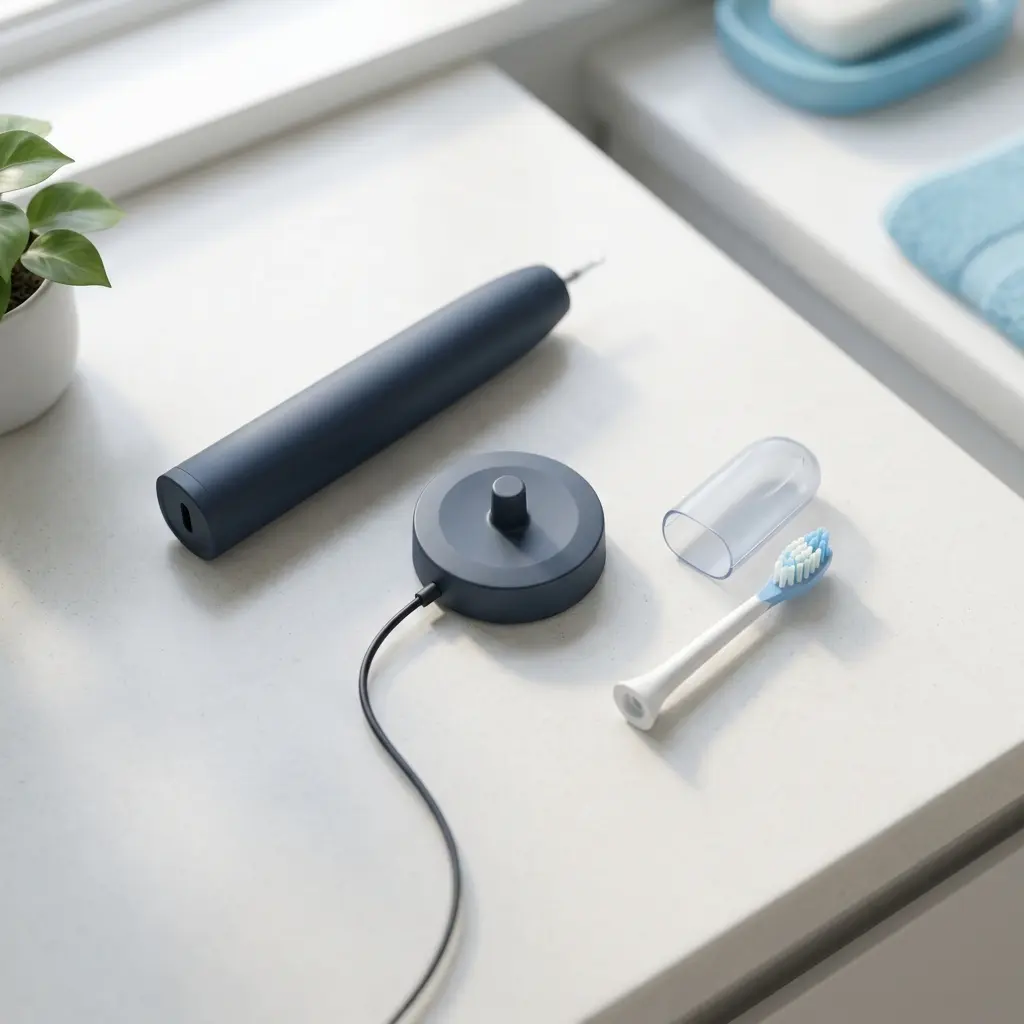
The Philips Sonicare 4100 toothbrush looks simple, and that works in its favor. Overall, you get a slim white handle, one power button, and an oblong brush head. Also, there is no screen and no app. As a result, setup takes about a minute.
In the box, you usually get the handle and a round charging stand. Also included is one C2 brush head with a travel cover. However, the brush does not include a full travel case. So plan to buy one if you travel often.
The build feels light at about 3.5 ounces with the head attached. Even so, reviewers describe it as sturdy, not flimsy. Electric Teeth called the handle well built, backed by a two-year warranty.
The charging stand holds the brush upright and doubles as storage. Also, an LED on the handle shows charge level, glowing green when full and flashing orange when low.
How the Philips Sonicare 4100 Toothbrush Cleans
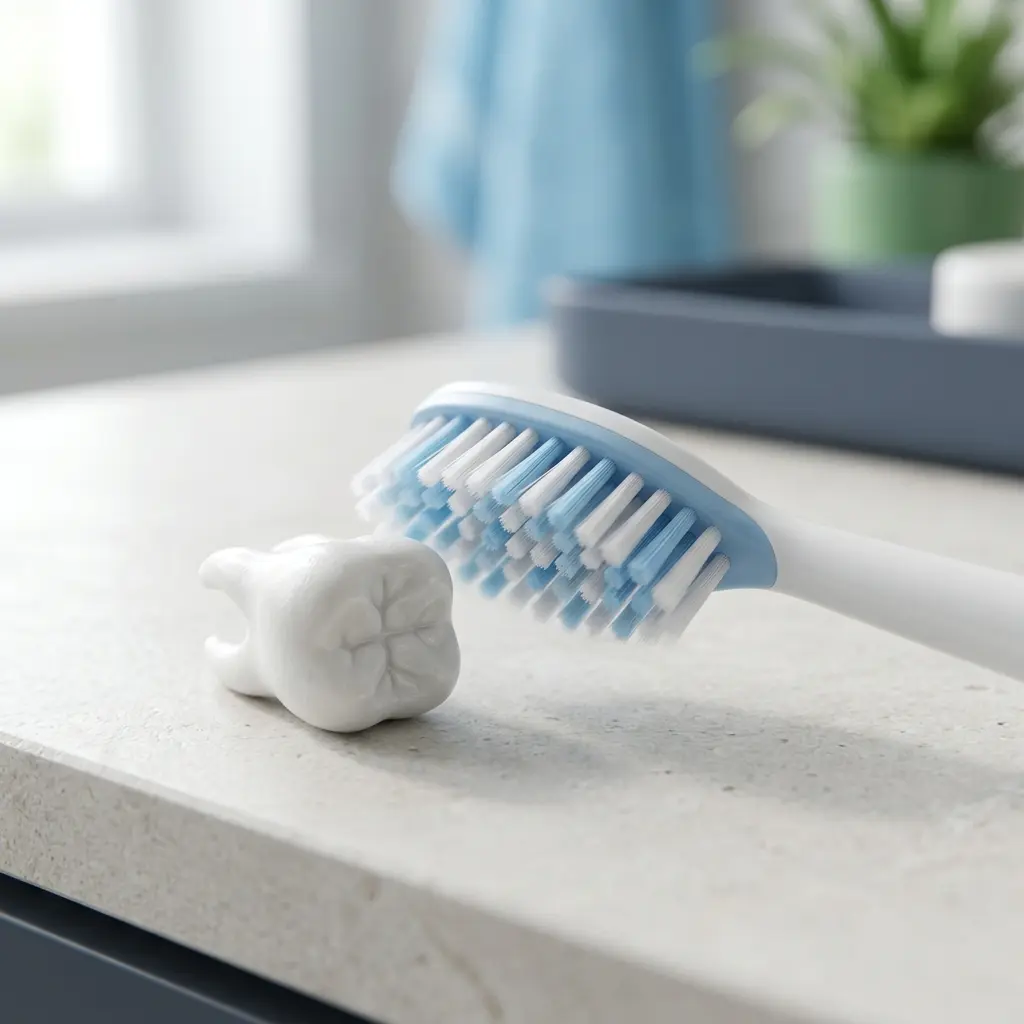
Short answer: it cleans gently, yet thoroughly, using sonic vibration rather than a rotating head. In addition, its oblong head moves at up to 31,000 strokes per minute.
The sonic motion pulses fluid between teeth, rather than only scrubbing the surface. Philips says this action removes far more plaque than a manual brush. That is a brand claim, so treat it as a best case. Still, outside reviewers back up the everyday result.
Electric Teeth tested the 4100 Series and called it among the very best brushes it has reviewed. Likewise, TechGearLab awarded it 4.8 out of 5 and named it the best electric toothbrush on a budget. On the other hand, a round head like the Oral-B Pro 1000 hugs one tooth at a time instead. Therefore, the feel differs quite a bit.
Sonic Vibration vs a Manual Brush
The gap with a manual brush is easy to see. For instance, a manual brush moves about 300 strokes per minute. In contrast, this brush pulses up to 31,000 times per minute.
| Feature | Manual Brush | Philips Sonicare 4100 |
|---|---|---|
| Movement per minute | About 300 strokes | Up to 31,000 sonic strokes |
| Timer | None | 2 minutes with 30-second QuadPacer pulses |
| Pressure control | Your own hand | Sensor vibrates and cuts power under heavy pressure |
| Cleaning motion | Side-to-side scrubbing | Sonic vibration that pulses fluid between teeth |
| Effort | You do the scrubbing | The brush does the motion |
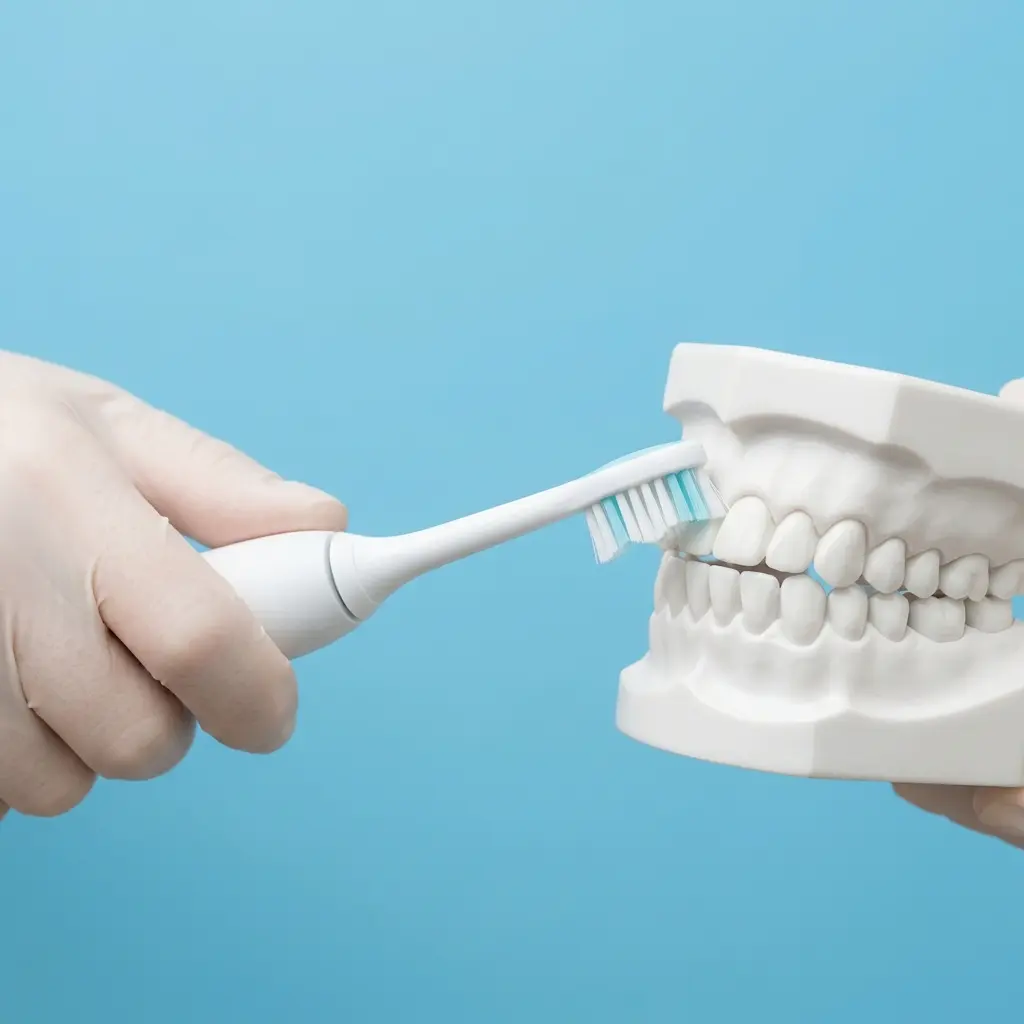
Pressure Sensor and Timer: Smart Guardrails
Short answer: both features work well, though the sensor has room to improve. Even so, they cover the habits that matter most.
The timer runs for two minutes. Meanwhile, it pulses every 30 seconds through the QuadPacer. That way, you know when to move to the next quarter of your mouth. Reviewers consistently praise this feature at the price.
The pressure sensor vibrates and reduces power when you press too hard. This protects your gums and enamel from over-brushing. However, Forbes notes the pressure sensor could be better than it currently is. Therefore, pair it with a light touch rather than relying on it fully.
Tip: hold the head lightly against each tooth. Then let the sonic vibration do the work. Above all, do not scrub back and forth.
Battery Life, Charging, and Noise
How Long Does the Battery Last?
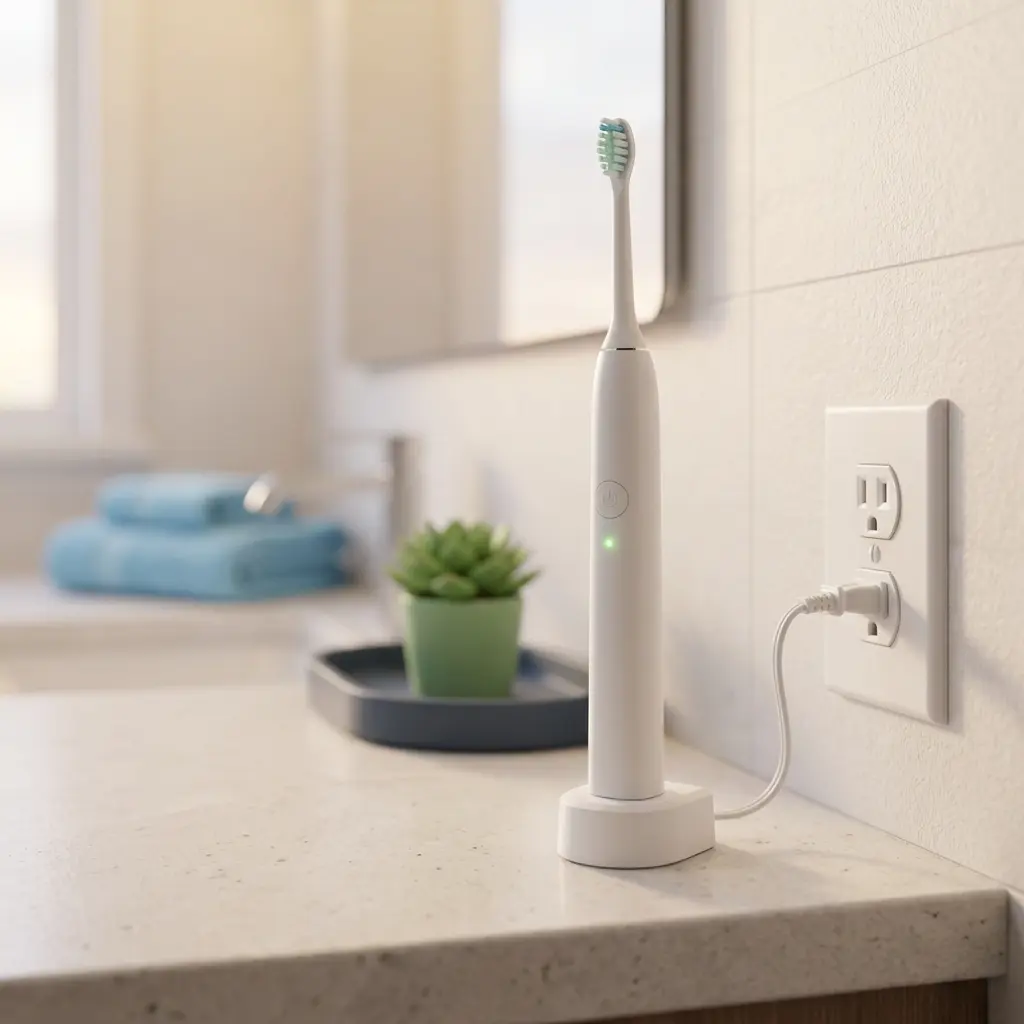
Short answer: expect somewhere between 8 and 14 days per charge. In addition, Philips Sonicare battery life depends on your settings and habits.
Philips lists up to 14 days on a single charge. Meanwhile, Trail and Kale measured closer to 8 to 10 days with twice-daily brushing on the higher intensity. That gap is worth noting before you buy.
Charging a Philips Sonicare toothbrush battery takes longer than many rivals. A full charge can take up to 24 hours, per Electric Teeth. So plug it in overnight on the charging stand and let it sit.
Noise is a strong point here. Indeed, the sonic motion runs quieter than a rotating-oscillating brush like many Oral-B models. Meanwhile, buyers on Walmart and Philips’s own site describe the sound as gentle rather than harsh.
Brush Heads and Running Costs
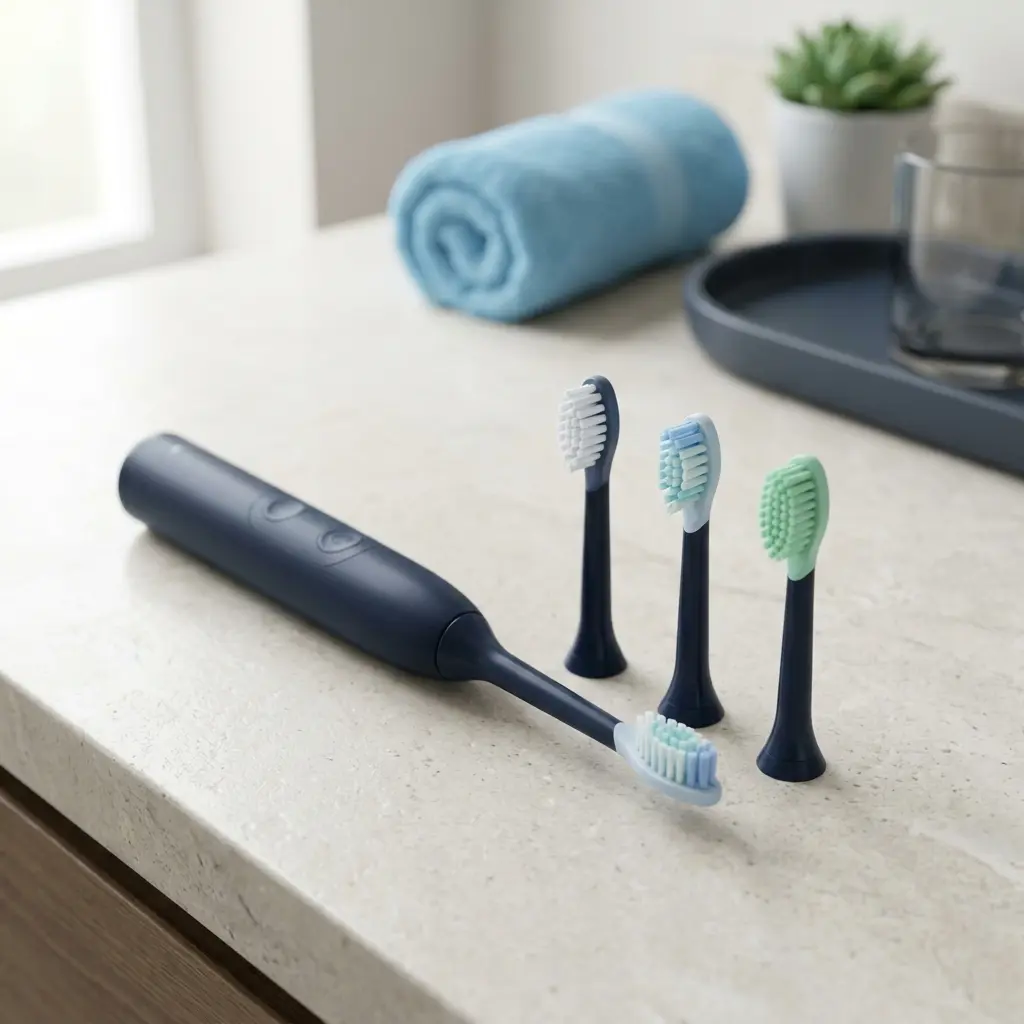
Replace the head every three months, or sooner if the bristles splay. Philips states this on its listings. Because the handle takes several click-on head types, you can pick the clean you want.
Meanwhile, the table below lists the most common options that fit this handle.
| Brush Head | Best For |
|---|---|
| C2 Optimal Plaque Control | Everyday cleaning, included in the box |
| C1 Simply Clean | A softer everyday option |
| G2 Optimal Gum Care | Gentle care for sensitive gums |
| W Optimal White | Polishing away surface stains |
Running costs stay reasonable, but prices change often. Therefore, check current listings before you stock up. Philips also backs the brush with a two-year warranty from the purchase date.
Philips Sonicare 4100 Toothbrush Pros and Cons
Here is the quick balance sheet. As a result, you can spot deal-breakers fast.
What We Like
- Excellent value for a sonic brush
- Up to 31,000 gentle, effective strokes per minute
- Built-in 2-minute timer with QuadPacer
- Pressure sensor helps prevent over-brushing
- Quiet compared to rotating brushes
- Long claimed battery life
- 2-year warranty
What Could Be Better
- Only 1 mode with 2 intensities
- Real-world battery often shorter than 14 days
- Slow charge, up to 24 hours
- No travel case included
- Pressure sensor could be more sensitive
- No app or connected tracking
Philips Sonicare 4100 Toothbrush vs Rivals
How does it stack up? Below, we compare it with three brushes we cover on this site. Because each brush suits a different buyer, look at the rows that matter most to you. For example, if battery life matters, the gap with the iO Series 7 is clear.
| Feature | Sonicare 4100 | Oral-B Pro 1000 | Oral-B iO Series 7 | Waterpik Sonic-Fusion 2.0 |
|---|---|---|---|---|
| Cleaning style | Sonic vibration, oblong head | Round head: oscillating, rotating, pulsating | Round head with micro-vibrations | Sonic vibration plus water flossing |
| Modes | 1 (2 intensities) | 1 | 5 | Brush + floss combo |
| Pressure sensor | Yes, vibrates and cuts power | Yes, stops pulsing (no light) | Yes, visible light ring | Not the main focus |
| Timer | 2 minutes, QuadPacer | 2 minutes, 30-second pulses | 2-minute timer | 2-minute timer with pacer |
| Battery | Up to 14 days claimed; 8-10 in practice | About 7 to 10 days (NiMH) | About 2 weeks | Several days, model dependent |
| Best for | Value-focused sonic buyers | Tight budgets and first-timers | Feature hunters | Braces and implants |
In short, the Sonicare 4100 wins on comfort and quiet running. However, the iO Series 7 wins on modes, and the Waterpik wins if flossing matters most. Meanwhile, the Oral-B Pro 1000 undercuts it on price. See how all four compare in our adult electric toothbrush guide.
Oral-B and Waterpik details come from our own reviews and Amazon listings. Therefore, confirm current specs on each listing before you buy.
Who Should Buy the Philips Sonicare 4100 Toothbrush?
Not every brush fits every mouth. Therefore, use this quick guide. First, check the list that sounds like you.
Buy It If
- You want a gentle, quiet sonic clean
- You like a simple, single-button brush
- You travel and want a long battery
- You do not need an app or several modes
- You want strong value for the price
Skip It If
- You want several cleaning modes
- You need a travel case in the box
- You want the longest possible battery life
- You want a visible pressure indicator light
- You prefer a round, rotating head
How to Use the Philips Sonicare 4100 Toothbrush Correctly
Good technique matters as much as the brush itself. So follow these steps for a safe, thorough clean.
- Charge the brush fully before the first use.
- Wet the head, then add a pea-sized amount of toothpaste.
- Place the head lightly against your gums and teeth.
- Press the power button, and let the sonic vibration guide itself along each tooth.
- Move to a new quarter each time the QuadPacer pulses, every 30 seconds.
- Ease off if the brush vibrates strongly, since that signals too much pressure.
- Rinse the head, then let it air dry upright on the stand.
- Replace the head every three months.
For a deeper walkthrough, read our step-by-step brushing guide.
Philips Sonicare 4100 Toothbrush FAQs
Yes, it makes a solid starter brush. The Philips Sonicare 4100 toothbrush has one button and one mode, so there is almost nothing to learn. TechGearLab named it the best electric toothbrush on a budget for exactly this reason. However, the sonic vibration can feel unusual at first if you are used to manual brushing. So start with the lower intensity and let the brush do the work. Meanwhile, if your gums feel tender after a week, ease up on pressure or ask your dentist.
Philips lists up to 14 days per charge. However, real-world results often fall short of that claim. Trail and Kale measured closer to 8 to 10 days with twice-daily brushing on the high setting. Therefore, expect somewhere in that range rather than a full two weeks. Also, a full charge can take up to 24 hours, so plan to leave it on the stand overnight. Most buyers still find this plenty for travel.
No. The Philips Sonicare 4100 toothbrush has a single cleaning mode with two intensity settings. If you want more modes, such as a dedicated whitening or gum-care setting, look at a higher Sonicare series instead. On the other hand, the single-mode design keeps the brush simple and affordable. Most reviewers see this as a fair trade-off given the price. Above all, talk to your dentist if you need a specific mode for gum disease.
It depends on what you value most. The Sonicare 4100 runs quieter and often lasts longer between charges. Meanwhile, the Oral-B Pro 1000 usually costs a bit less and uses a round, rotating head instead of sonic vibration. Therefore, pick the Sonicare 4100 if comfort and battery life matter most. Pick the Pro 1000 if price is your only concern. See our full comparison guide for more detail.
Not any head, but many. The 4100 takes Sonicare’s standard click-on heads, including C1, C2, C3, G2, and W styles. Therefore, check the packaging before you buy replacements. Also, pick genuine Philips heads when you can, since they fit the handle as intended. Finally, replace the head every three months, or sooner if the bristles look worn.
No, it runs fairly quiet. The sonic vibration produces a softer hum than a rotating-oscillating brush like many Oral-B models. Several buyers on Philips’s own site describe the sound as gentle rather than harsh. However, noise is subjective, so your experience may differ slightly depending on your bathroom’s acoustics. Overall, noise rarely affects the value here.
Yes. Philips backs the 4100 with a two-year warranty that starts on the purchase date. If the brush is defective in that period, Philips will typically replace it. However, the warranty does not cover cosmetic wear such as scratches. Therefore, keep your receipt or order email. Also, read the full terms on Philips’s site, because they can change.
Final Verdict: Should You Buy the Philips Sonicare 4100 Toothbrush?
The Philips Sonicare 4100 toothbrush earns its spot as our top value pick. It cleans gently, it keeps time, and it runs quiet compared with rotating brushes. Moreover, it often sells for around $50 or less, with deeper cuts during Black Friday and Cyber Monday. Overall, it gives value-focused buyers most of what they need.
However, it is not perfect. The single mode limits flexibility, and the real-world battery trails the 14-day claim. Consequently, people who want several settings should look at a higher Sonicare series or the iO Series 7 instead. Everyone else can buy with confidence.
Keep Reading on Syed Shoppe
Want more help choosing? Then try these pages, which are live now.