
Air Fryer Liners: Types, Safety, and How to Use Them
Air Fryer Liners Guide: Quick Navigation
What Air Fryer Liners Do and Why They Matter
Air fryer liners protect your basket from grease, crumbs, and sticky glazes. In its testing, America’s Test Kitchen found that most air fryer liners performed poorly, so choosing well matters. This guide, last updated in October 2026, explains which materials work and why. It also pairs well with our beginner’s guide to cooking in an air fryer, so you can start with confidence.
Cleaning a greasy basket takes time, and many baskets are not dishwasher-safe. A liner catches the mess, so you can toss it or rinse it. However, the wrong liner can block airflow or create a fire hazard. That is why the details below matter.
Below, you will learn how each material works, how to place it safely, and how to pick the right size. First, let’s look at the main types.
As an Amazon Associate, Syed Shoppe earns from qualifying purchases.
The Main Types of Air Fryer Liners
Most air fryer liners fall into three groups. First, parchment liners are disposable paper sheets or bowls. Second, silicone liners are reusable mats that you wash. Finally, aluminum foil is the backup option many cooks already own.
Each material suits a different cook. For example, a busy parent may want disposable paper for fast cleanup. Meanwhile, an eco-minded cook may prefer silicone to reduce waste. Foil works too, but it needs extra care.
According to America’s Test Kitchen, store-bought liners come in two materials. Parchment is disposable, while silicone is reusable and usually dishwasher-safe. That means your choice of air fryer liners often comes down to waste, cost, and how messy your food is.

Parchment Air Fryer Liners: Pros and Limits
How Parchment Liners Perform
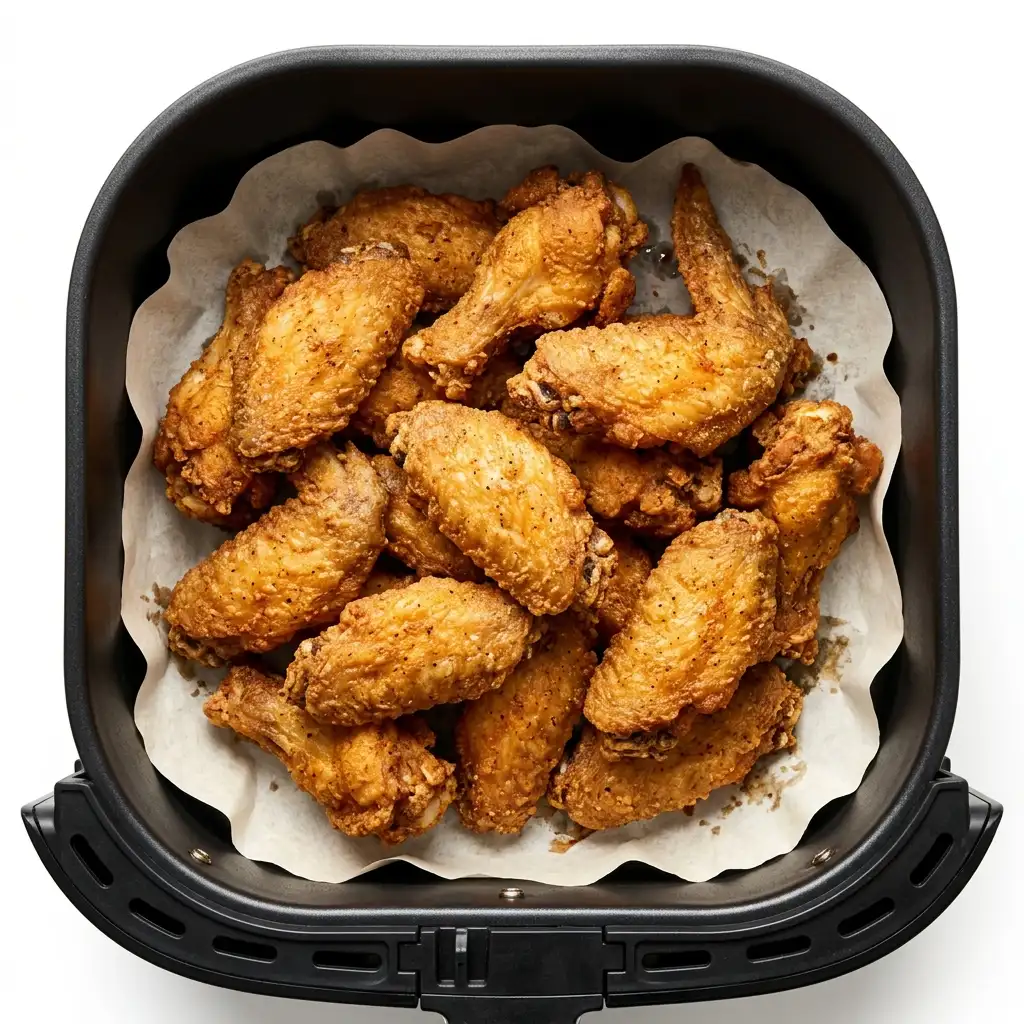
Parchment liners are thin, so heat passes through to the food. America’s Test Kitchen preferred paper liners with solid surfaces and low sides. Those liners caught grease and sticky glaze well. In contrast, liners with holes let grease leak through.
Manufacturer guidance adds a few rules. Reynolds labels its parchment air fryer liners safe up to 400°F, on the air fryer setting only. The label also says to weigh the liner down with food. In addition, it warns you to keep paper away from the heating element.
Parchment Limits to Know
Paper air fryer liners are not reusable, so you will buy refills over time. They can also crumple around food during cooking. Because loose paper can fly into the heating element, never run the fryer with an empty liner inside.
If you want tested air fryer liners, America’s Test Kitchen named the Loveuing 9.1-inch disposable set its best paper pick.
Silicone Air Fryer Liners: Reusable and Easy to Clean
Why Cooks Choose Silicone
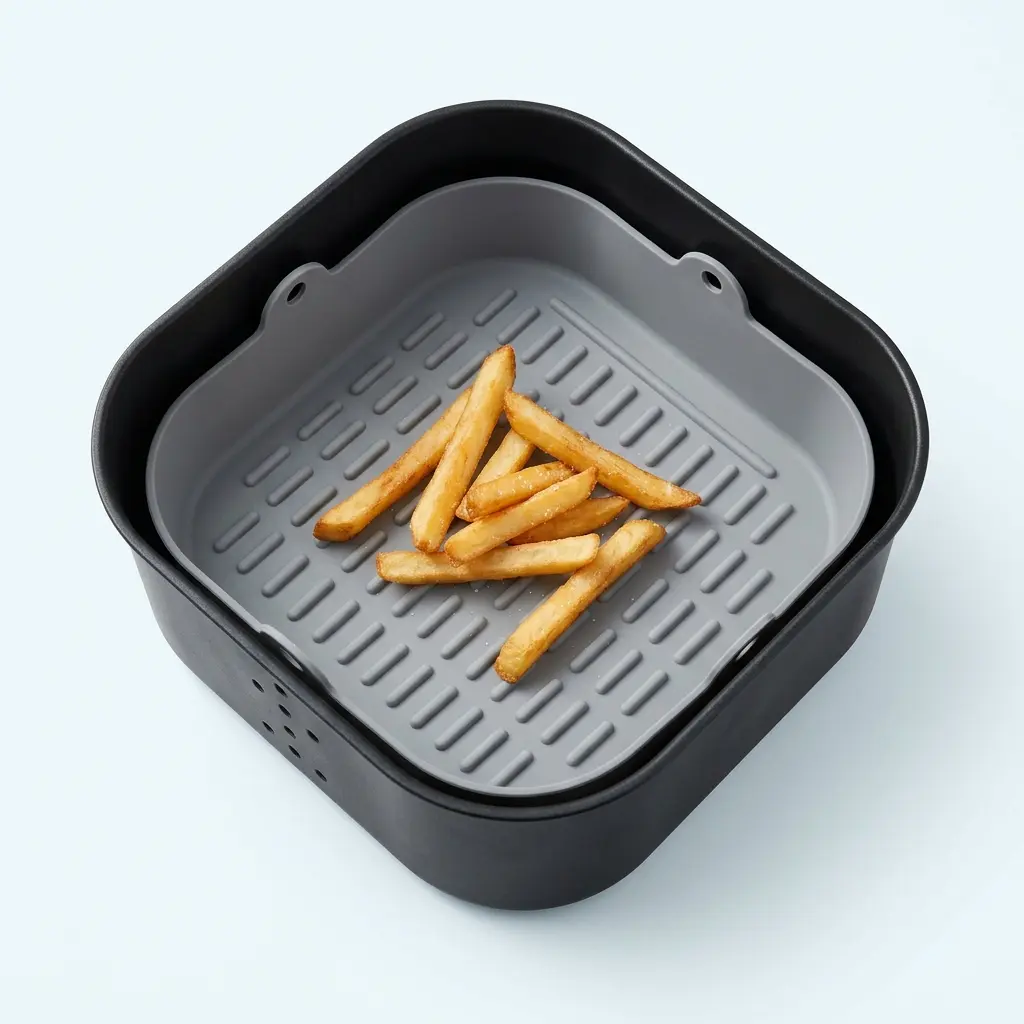
Silicone air fryer liners can last for many uses, so they cut down on paper waste. Most are dishwasher-safe, which helps when your basket is not. Because silicone is heavier than paper, it stays put during preheating.
Thickness matters, though. America’s Test Kitchen preferred silicone under 2 millimeters thick. Thicker mats slowed cooking by roughly 3 to 4 minutes on average, since heat passed through them less easily.
Silicone Drawbacks
Some silicone air fryer liners are too small for large baskets. Others have high sides that block airflow. Also, a thin mat can be hard to lift out while it is hot. Therefore, let it cool first.
While options vary, America’s Test Kitchen picked the Infraovens silicone set, which has short 0.5-inch sides. However, the review noted that it did not cover the whole basket, so measure first.
Can You Use Foil or Wax Paper Instead?
Aluminum Foil: Use It Carefully
Foil can stand in for air fryer liners as a backup, but it needs care. Food Republic suggests using foil sparingly because it may block airflow. Some manufacturers also discourage foil, so check your manual first.
Place foil in the basket only, and never on the bottom of the fryer. Tasting Table adds that foil must not touch the heat source. Otherwise, you create a safety risk.
Why Wax Paper Fails
Wax paper is not a safe liner. Because the wax melts as the fryer heats, it leaves residue and creates a fire risk. Parchment looks similar, but it carries a silicone coating that handles heat.
Air Fryer Liners Compared: Parchment, Silicone, and Foil
Use this table to compare the three types of air fryer liners quickly. However, always check each product’s label, because heat ratings vary by brand.
| Feature | Parchment | Silicone | Foil |
|---|---|---|---|
| Reusable? | No, single use | Yes, wash and reuse | Usually single use |
| Cleanup | Toss after cooking | Hand wash or dishwasher (check the label) | Toss after cooking |
| Heat note | Reynolds label: up to 400°F (manufacturer guidance) | Seller listings range from about 430°F to 450°F | Handles high heat, but keep it off the element |
| Best for | Messy or glazed food | Frequent use and less waste | A backup when you have no liner |
| Watch out for | Unweighted paper can lift toward the heating element | Thick or tall mats can slow cooking | May block airflow, and some brands discourage it |
Overall, parchment suits easy cleanup, while silicone suits repeat use. Foil remains a careful backup.
How to Use Air Fryer Liners Safely
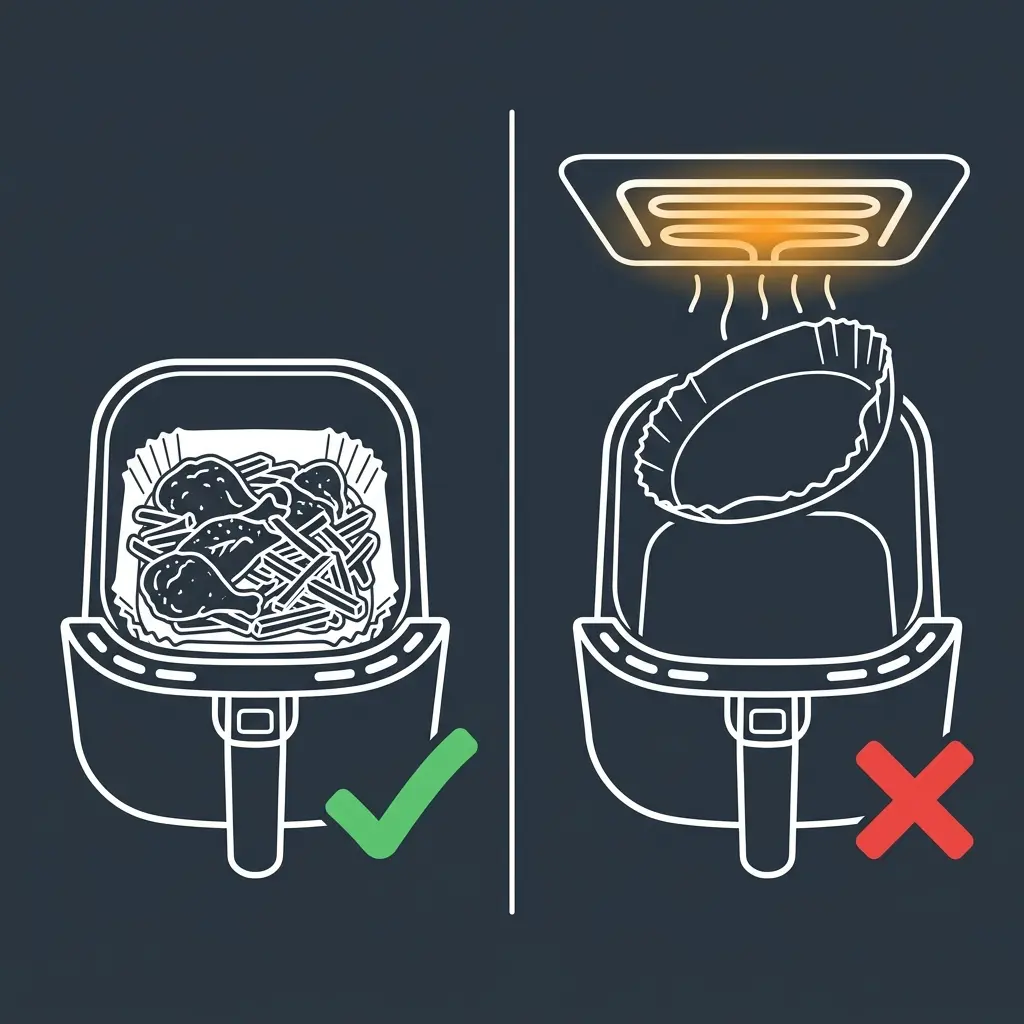
Safe use of air fryer liners comes down to weight and placement. Because the fan can blow a loose paper liner into the heating element, a fire hazard can result. America’s Test Kitchen warns about this risk, and Reynolds’ label repeats it.
Step-by-Step Placement
- First, measure your basket and choose a liner that fits it.
- Next, preheat the fryer with the basket empty and no liner inside.
- Then, place the liner in the basket and add your food on top.
- Make sure the food weighs the liner down on all sides.
- Keep the liner away from the heating element at all times.
- Finally, remove the food first, and lift out the liner once it cools.
Silicone is heavier, so it is less likely to lift. Still, the same placement rules apply.
How to Choose the Right Size and Shape
Fit is the biggest buying factor. America’s Test Kitchen found that many liners were too small, so food ended up crowded. Its team liked square liners at least 9 inches wide for a 10-inch square basket. So measure your basket before you shop.
Sides, Holes, and Thickness
While low sides let air move around the food, tall sides block it. America’s Test Kitchen preferred sides no taller than 1.75 inches. Holes, on the other hand, are a point of disagreement. The same test found that perforated air fryer liners let grease through. However, Reynolds designs its paper liners with holes for airflow.
Because the sources disagree, a flexible approach works best. Choose a solid liner for messy or glazed food. For dry snacks, a perforated or ridged liner may keep air moving.
If you are still choosing a fryer, our Home & Kitchen reviews cover other popular kitchen gear.
Common Mistakes With Air Fryer Liners
Preheating With an Empty Liner
This is the most common error. An empty paper liner is light, so the fan can lift it toward the heating element. Instead, add the liner when you add the food.
Covering the Whole Basket
Liners with tall sides or no gaps can block airflow. As a result, food may cook unevenly or take longer. Choose a low-sided liner that leaves room around the edges.
Using Air Fryer Liners for Every Meal
You may not need a liner for every cook. Dry foods often release little grease, so the basket stays fairly clean. Save liners for sticky, saucy, or greasy meals, and you will also cut waste.
Cleaning and Reusing Air Fryer Liners
Silicone air fryer liners are easy to care for. Wash them with warm, soapy water, or use the dishwasher if the label allows it. America’s Test Kitchen notes that most silicone models are generally dishwasher-safe, so check yours.
Paper liners need less effort. Because paper absorbs grease, treat each sheet as single use. Toss it after cooking, once it has cooled.
A lined basket also needs less scrubbing. For more kitchen tips and product guides, visit our Review & Guides hub.

Air Fryer Liners FAQ
Yes, if you use it correctly. Cut it to fit, add it with the food, and keep it away from the heating element. Pre-cut parchment liners are made for this job, so they are usually the easiest choice.
They can be safe when you follow the label. Weigh paper liners down with food, never preheat with an empty liner, and stay within the stated temperature. Reynolds, for example, lists 400°F on the air fryer setting only.
It depends on your priorities. Parchment offers disposable cleanup, while silicone is reusable and cuts waste. America’s Test Kitchen liked both types when they were thin, solid, and low-sided. Pick the one that fits your basket.
Often yes, but with care. Keep foil in the basket, away from the heating element, and avoid blocking airflow. Some manufacturers discourage foil, so check your manual before you try it.
They can. America’s Test Kitchen found that thick silicone added about 3 to 4 minutes on average. In contrast, thin liners with low sides did not extend cooking times. So check your food a little early with any new liner.
Final Verdict on Air Fryer Liners
Overall, the best choice depends on how you cook. If you want simple cleanup, choose parchment for glazed or greasy food. However, cooks who use the fryer often may prefer silicone, which cuts waste. Use foil only as a careful backup.
Whatever you pick, add the liner with the food, keep it weighted down, and measure your basket first. For more kitchen help, browse our Home & Kitchen picks.
Tested paper pick: Loveuing 9.1-inch disposable liners
Tested silicone pick: Infraovens reusable mat set