
Head Phones: The Complete Buying Guide for Every Listener
Compare types, features, and top picks, then choose the right pair for music, work, travel, or the gym.
Last updated: October 2026
Choosing head phones feels harder than it should. Dozens of types, features, and price tiers compete for your attention. Besides that, long listening sessions can strain your ears, so safe volume matters too. In fact, health experts warn that loud listening adds up quickly over time. This guide explains the basics in plain language. As a result, you can pick with confidence.
First, you will learn how each type sounds and feels. Next, we compare wired and wireless designs. Then we break down features like noise cancelling and battery life. After that, three picks show how the advice works in real life. Prefer to start narrower? Our complete guide to over-ear headphones goes deeper on that style.
Head Phones at a Glance: Which Type Fits You?
Over-ear head phones suit most people who want comfort, sound quality, and isolation. On-ear models save weight and space. In-ear and bone conduction designs suit workouts and travel. Therefore, match the type to your daily routine before you compare brands.
| Your situation | Best type | Why it works |
|---|---|---|
| Commute and travel | Over-ear with noise cancelling | Blocks engine and crowd noise |
| Work and calls | Over-ear or on-ear with a mic | Clear voice and all-day comfort |
| Gym and running | In-ear or bone conduction | Secure fit with little bulk |
| Studio and critical listening | Wired, closed-back | Accurate sound, no battery |
| Casual listening | On-ear | Light, compact, and affordable |
Types of Head Phones: Over-Ear, On-Ear, and More
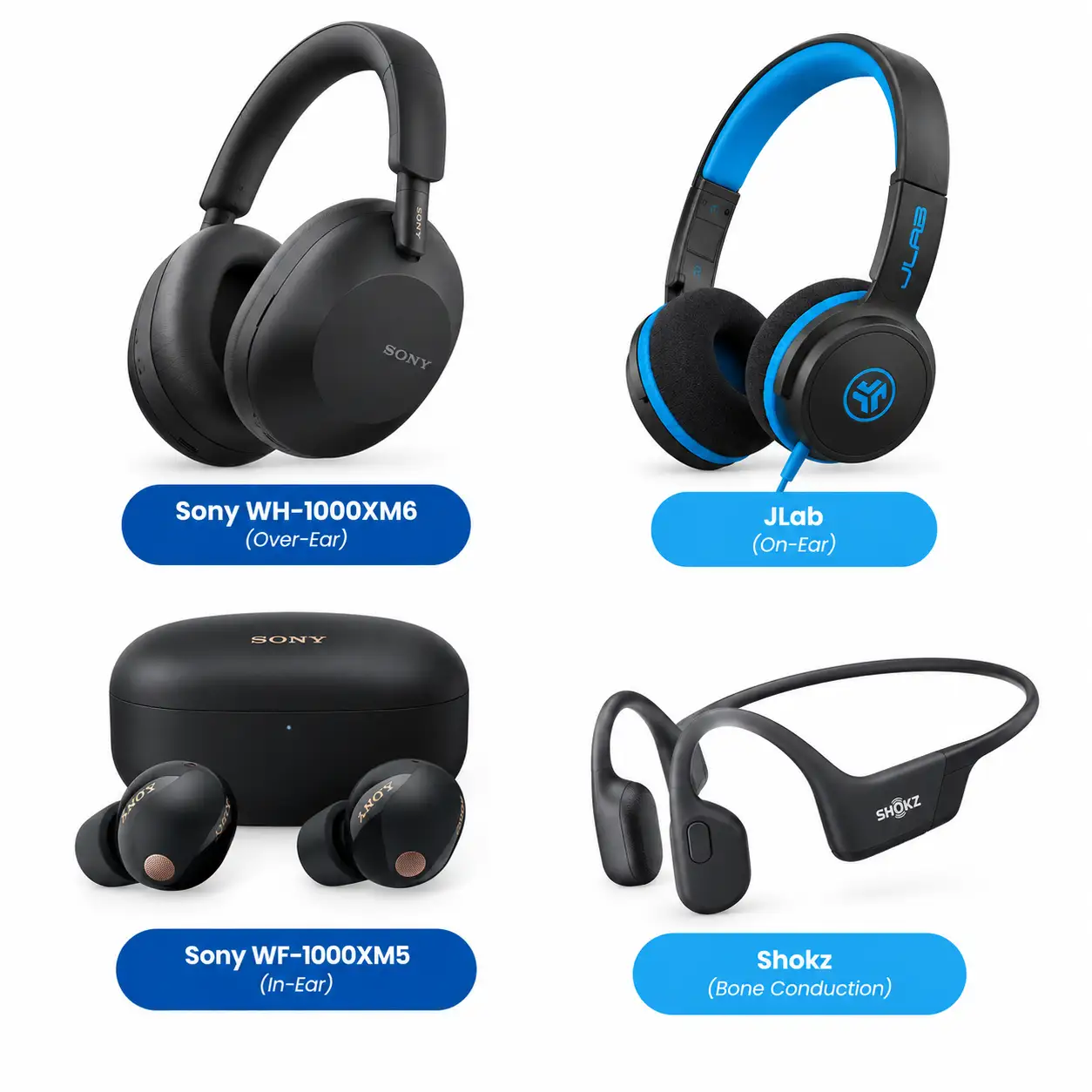
Head phones come in several shapes, and each shape changes comfort and sound. Over-ear models surround the ear, so they isolate noise and fit larger drivers. On-ear models rest on the ear, which keeps them lighter. In-ear models sit in the ear canal and travel easily. Finally, bone conduction designs leave your ears open.
- Over-ear: full cups around the ears, best for isolation and long sessions
- On-ear: lighter and smaller, though they press on the ears
- In-ear: tiny and portable, with a snug seal
- Bone conduction: open ears, ideal for running and street safety
- Closed-back vs open-back: closed-back isolates, while open-back sounds airy but leaks
Wired vs Wireless Head Phones
The wired vs wireless head phones choice depends on where you listen. Wired pairs win at desks and in studios, while wireless pairs win on the move.
- No battery, pairing, or charging
- Often better sound for the money
- Easy to repair with swappable cables
- Cable can tangle or snag
- Many phones lack a headphone jack
- Freedom to move without a cable
- Noise cancelling and multipoint pairing
- Easy calls and voice assistants
- Battery needs regular charging
- Costs more for the same sound quality
Key Features to Check in Head Phones
Specs can feel confusing, so focus on six that change daily use with head phones.
- Noise cancelling: microphones cut steady noise, so you can listen at lower volume
- Drivers: most full-size models use 30 to 50 mm drivers, but tuning matters more than size
- Battery life: full-size wireless models often last 30 to 70 hours
- Impedance: 16 to 38 ohms works with phones and laptops without an amplifier
- Comfort: weight and cushions matter, since 250 to 285 grams is common
- Mic and multipoint: clear calls and easy switching between two devices

Headphones for Music: What Matters Most
Music listeners should look at sound balance, comfort, and isolation. Stereo headphones that stay balanced reveal detail in every genre. Closed-back models keep bass tight in noisy rooms, while open-back models sound wider at home. Also, a wired pair avoids Bluetooth compression. For example, the Audio-Technica ATH-M50x covers 15 to 28,000 Hz. That exceeds the roughly 20 to 20,000 Hz range most people hear. The best music headphones also feel comfortable for hours. That makes head phones for long sessions worth a careful fit check.
Top Head Phones Picks by Type
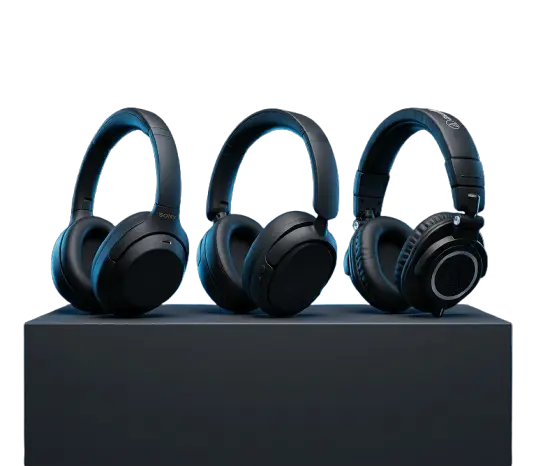
These three picks show how the advice works in practice. Prices are approximate and change often, so confirm the current price on Amazon.
Sony’s flagship pairs a QN3 processor with 12 microphones for strong noise cancelling. Besides that, it weighs about 254 grams, so long flights stay comfortable. Read our Sony WH-1000XM6 review for gym-focused notes.
- 30 mm drivers with Hi-Res Audio support
- Bluetooth 5.3, about 30 hours with noise cancelling on
- Roughly $380 to $460
This budget pair adds hybrid noise cancelling, 40 mm drivers, and multipoint Bluetooth for about $80. Moreover, reviewers at GodisaGeek praise its value. Our JLab JBuds Lux ANC review covers real gym use.
- 40 mm drivers, Bluetooth 5.3, multipoint
- Up to 25 dB noise reduction
- About $80
The closed-back ATH-M50x uses 45 mm drivers and a 15 to 28,000 Hz range. Furthermore, three detachable cables make it flexible, as the Audio-Technica spec sheet confirms.
- 38 ohms impedance, about 285 grams
- Detachable 1.2 m to 3 m cables
- From about $150
How to Choose Head Phones by Budget and Use
When shopping for head phones, budget shapes the choice more than brand. In short, spend where it changes your day. Commuters should pay for noise cancelling, while desk listeners can save with a wired pair.
| Budget | What to expect | Good fit |
|---|---|---|
| Under $100 | Noise cancelling and long battery are possible | Students and budget commuters |
| $100 to $250 | Studio-grade wired pairs and solid wireless models | Music fans and home workers |
| $250 and up | Flagship noise cancelling and premium call quality | Frequent flyers and office workers |
Price bands are approximate and based on typical Amazon pricing.
Safe Listening With Any Head Phones
Good head phones still need smart habits. NIOSH recommends staying at or below 85 decibels for eight hours. However, every 3 decibels above that halves the safe time. Therefore, keep the volume moderate and take breaks.
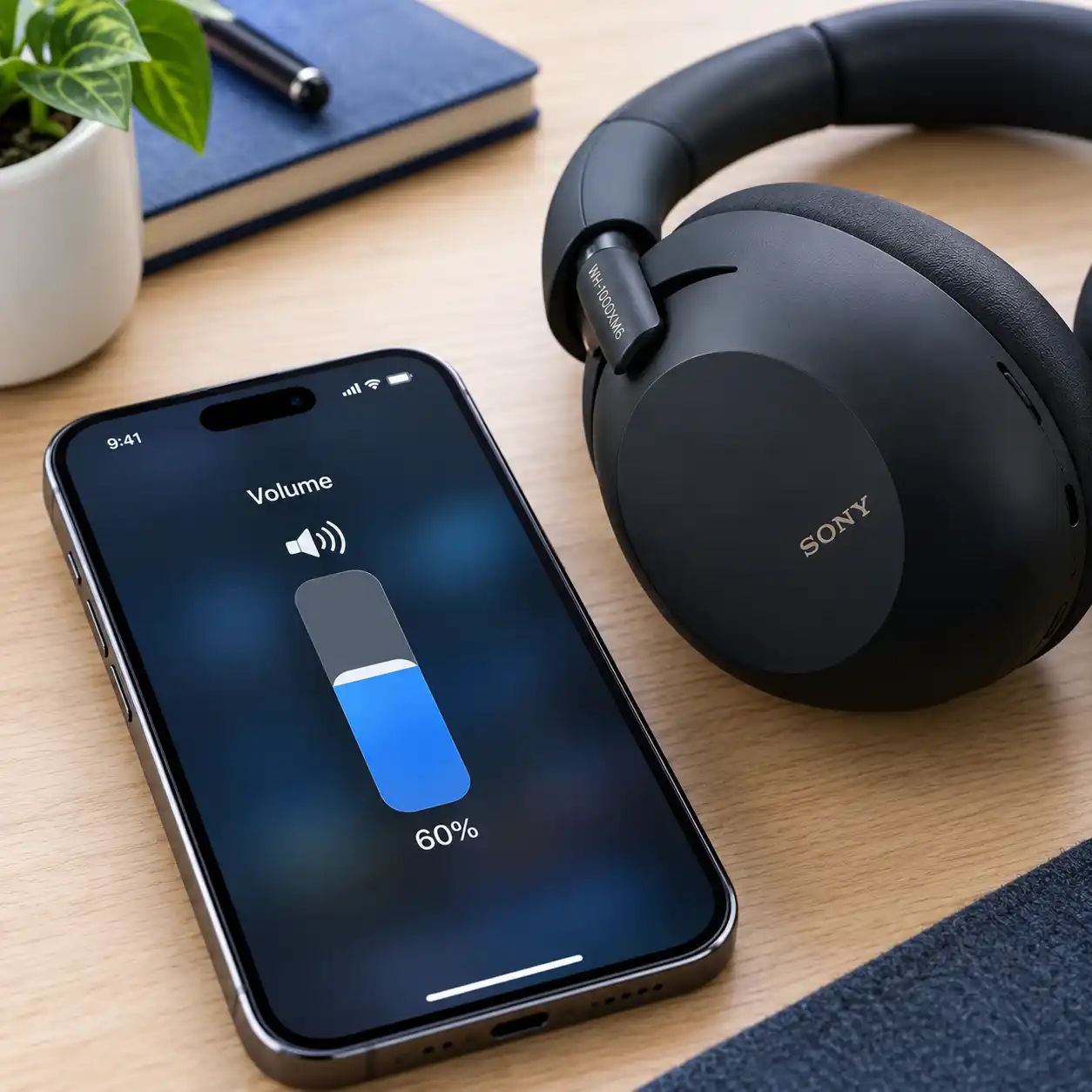
- Keep volume near 60% for long sessions
- Rest your ears for a few minutes every hour
- Turn it down if others can hear your music
- Use noise cancelling so you need not raise the volume
Common Mistakes When Buying Head Phones
- Buying on brand name instead of fit and comfort
- Paying for noise cancelling you will rarely use
- Ignoring weight, which matters on long sessions
- Skipping a return-policy check on Amazon
- Choosing wireless when a cheaper wired pair fits your desk
- Listening at high volume to hide background noise
Frequently Asked Questions
Over-ear models suit most listeners. They seal around the ears, stay comfortable for hours, and fit larger drivers. However, runners and travelers may prefer in-ear designs. In the end, the best head phones match your routine.
Noise cancelling helps on trains, planes, and in busy offices. It reduces steady sound, so you can listen at lower volume. However, it adds cost and needs battery power. Wired studio pairs skip it.
Wired models avoid batteries and pairing, and they often cost less for the same sound quality. Wireless models win on freedom and noise cancelling. Therefore, choose wired for desks and wireless for travel.
Plan for 30 hours or more on full-size models. For example, Sony lists about 30 hours with noise cancelling on for the WH-1000XM6. The JLab JBuds Lux ANC lists 40-plus hours with it on.
Not at high volume. NIOSH recommends staying at or below 85 decibels for eight hours. Also, take a break every hour and keep volume near 60%. Those steps protect hearing with any head phones.
Impedance measures electrical resistance in ohms. Low values, such as 16 to 38 ohms, work well with phones and laptops. High-impedance studio models may need an amplifier.
Final Summary: Choosing Head Phones With Confidence
Choosing head phones comes down to type, features, and budget. First, pick the style that fits your routine. Second, check noise cancelling, battery life, and comfort. Finally, keep the volume safe so your ears last. Start with one of the three picks above, or browse our reviews for more detail.
Explore More in Electronics
Keep Reading
Focus-friendly picks for desks and libraries.


