
Espresso Maker vs Espresso Machine: What Actually Differs
Espresso maker vs espresso machine, explained in plain language: pressure, price, and taste.
Last updated: October 2026
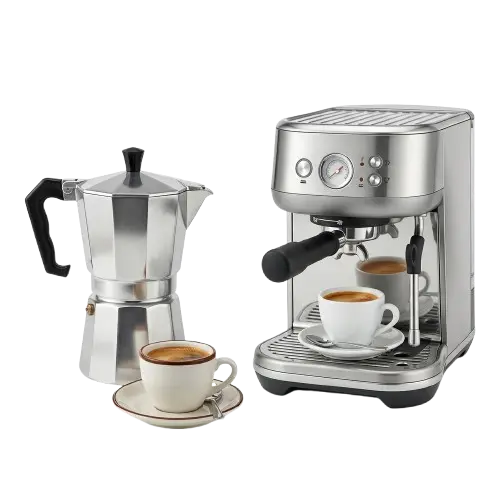
The espresso maker vs espresso machine question confuses almost every first-time buyer. Stores use both names, but the boxes often look alike. In fact, coffee writers note that espresso has no strict official definition. As a result, the labels blur further. In short, this guide separates fact from marketing. Also, you will see how pressure, price, and effort truly differ, whether your budget is small or large.
First, we explain what each term usually means. Next, we compare these on flavor, cost, and upkeep. Then you can match a brewer to your routine. Prefer a simpler morning? Our best coffee maker for home use guide covers easier options instead. Either way, you will know exactly what to buy.
Espresso Maker vs Espresso Machine: The Short Answer
While in everyday shopping, an espresso machine means a pump-driven appliance. Specifically, it pushes hot water through tightly packed grounds at about 9 bars of pressure. Where as an espresso maker, by contrast, is a looser label. For instance, retailers use it for stovetop moka pots, low-cost steam-driven units, and sometimes full machines. Therefore, check the pressure rating and pump type instead of trusting the name on the box. In the end, that gap sits at the heart of the espresso maker vs espresso machine choice.
- A true espresso machine reaches about 9 bars and builds crema
- While typical maker runs at 1 to 2 bars, so the coffee is bold but less layered
- Price, effort, and milk-drink ability differ far more than the names suggest
What Is an Espresso Maker?
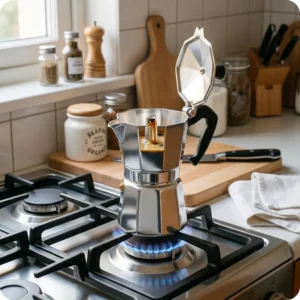
Moreover in this debate, the maker is the simple, budget-friendly side. The classic example is the stovetop moka pot, which Alfonso Bialetti introduced in 1933. Since steam pressure of roughly 1 to 2 bars then pushes hot water through the grounds. As a result, you get a strong, concentrated cup in about four to six minutes.
Many people call a moka pot a stovetop espresso maker. However, Home Grounds explains that a moka pot is not technically an espresso maker. After all, it lacks the pressure and the crema. Besides that, low-cost electric steam units fall into the same group. They use steam instead of a pump, so they reach lower pressure.
- Affordable, often $25 to $40 for a classic moka pot
- Simple to use and easy to clean
- Compact and portable, with no electricity needed for stovetop models
- Little to no crema on top
- No steam wand for silky milk
- Heat control matters, since high heat can add bitterness
What Is an Espresso Machine?
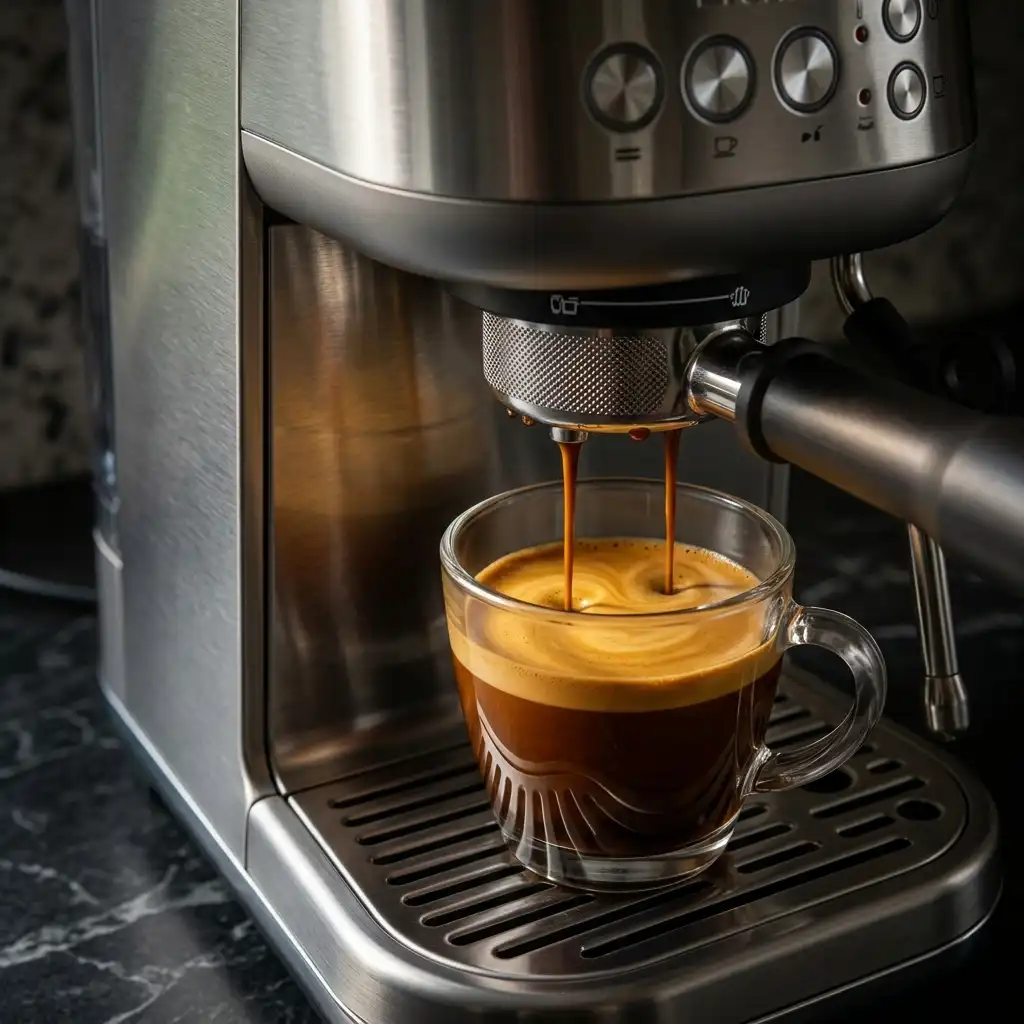
On the other side of the espresso maker vs espresso machine split, the machine is built for control. A motorized pump forces water through finely ground, tamped coffee at about 9 bars. Consequently, each shot finishes in roughly 25 to 30 seconds and carries golden crema. Additionally, most models include a steam wand for milk drinks.
Prices climb with control. For example, entry-level models like the Breville Bambino cost roughly $300 to $350. Likewise, the semi-automatic Gaggia Classic Pro runs near $400 to $450. Although those figures come from published buying guides, so confirm current prices on Amazon before you decide.
- True espresso with thick crema
- Steam wand for lattes and cappuccinos
- Consistent shots once you dial in the grind
- Higher upfront cost, plus a grinder
- Steeper learning curve
- Regular backflushing and descaling
Components of an Espresso Machine: What Sits Inside
Although comparing an espresso maker vs espresso machine gets easier once you know the components of an espresso machine. First, the water reservoir feeds a pump, and many home models use a vibration pump. Next, a boiler or heating chamber heats the water. The portafilter then holds the coffee, and the group head seals it in place. Finally, the steam wand froths milk. A moka pot has none of these parts, which explains its lower pressure.
- Water reservoir
- Pump
- Boiler or heating chamber
- Portafilter
- Group head
- Steam wand
Why Pressure Separates the Two
The espresso maker vs espresso machine split is mostly a pressure story. Espresso is generally brewed at about 9 bars, which equals roughly 130 psi. By comparison, a moka pot manages only 1 to 2 bars. Because of that gap, a moka pot rarely produces crema, while a pump machine builds it on every shot. Extraction time also differs. A machine finishes in about half a minute, but a moka pot needs several minutes.
| Espresso maker vs espresso machine | Typical espresso maker | Typical espresso machine |
|---|---|---|
| Pressure | 1 to 2 bars | About 9 bars |
| Pressure source | Steam or none | Motorized pump |
| Crema | Little to none | Thick golden layer |
| Brew time | 4 to 6 minutes | 25 to 30 seconds |
| Milk steaming | Not built in | Steam wand on most models |
| Best for | Bold, simple coffee | Espresso and milk drinks |
Types of Espresso Machines You Will Meet
Within the choice, machine types differ mainly in how much work you do. Overall, each step up changes the balance between control and convenience.
- Manual lever: Pump a lever by hand to build pressure, which rewards practice.
- Semi-automatic: Grind, dose, tamp, and time the shot. Many enthusiasts like this balance.
- Fully automatic: You handle a few prep tasks, then the machine takes control.
- Super-automatic: One push grinds, doses, tamps, brews, and often froths the milk.
- Pod machines: Capsules cut mess and skill. Our Nespresso Vertuo review shows how that trade-off feels.
Taste and Crema
Flavor shows the gap clearly. A moka pot delivers a bold, full-bodied cup with little crema. However, it lacks the syrupy texture of true espresso. Overheating can also add bitterness. In contrast, a pump machine produces layered flavor, with sweetness, acidity, and body in balance. Moreover, crema adds aroma and a smooth first sip. Strong coffee is not the same as espresso, so the espresso maker vs espresso machine taste gap is real.

Cost and Effort
Budget often decides this choice. A good moka pot costs roughly $20 to $55. Even with a hand grinder, startup stays near $20 to $130. In comparison, a machine usually starts around $300 and can pass $2,000. Add a grinder and accessories, and startup runs $500 to $2,500 or more, according to My Coffee Explorer.
The learning curve follows the money in the espresso maker vs espresso machine choice. A moka pot takes two or three tries. In contrast, a semi-automatic machine asks you to dial in grind size, dose, and timing. For example, a common starting recipe is 18 grams in and 36 grams out in 25 to 30 seconds. Also, be careful below about $200. One buying guide warns that cheap machines often use pressurized baskets. As a result, they may only slightly beat a quality moka pot.
| Espresso maker vs espresso machine costs | Typical espresso maker | Typical espresso machine |
|---|---|---|
| Brewer price | $20 to $55 | $300 to $2,000+ |
| Grinder | Helpful, optional | Essential |
| Accessories | Minimal | $50 to $100+ |
| Yearly upkeep | About $5 for a gasket | $30 to $60 |
| Learning curve | One to three tries | Moderate to steep |
Approximate figures from published buying guides. Prices change, so verify before you buy.
Which Fits You? Espresso Maker vs Espresso Machine
- Want strong coffee on a small budget
- Have a tiny kitchen or travel often
- Drink coffee black or with a splash of milk
- Prefer quick, low-effort cleanup
- Crave true espresso with real crema
- Drink lattes and cappuccinos most days
- Enjoy tuning your recipe each morning
- Can budget for a grinder as well
Many enthusiasts own both. For example, a moka pot handles travel and lazy weekends, while a machine handles daily drinks. Still, the choice usually comes down to milk drinks and budget.
Espresso Maker vs Espresso Machine: Daily Routine
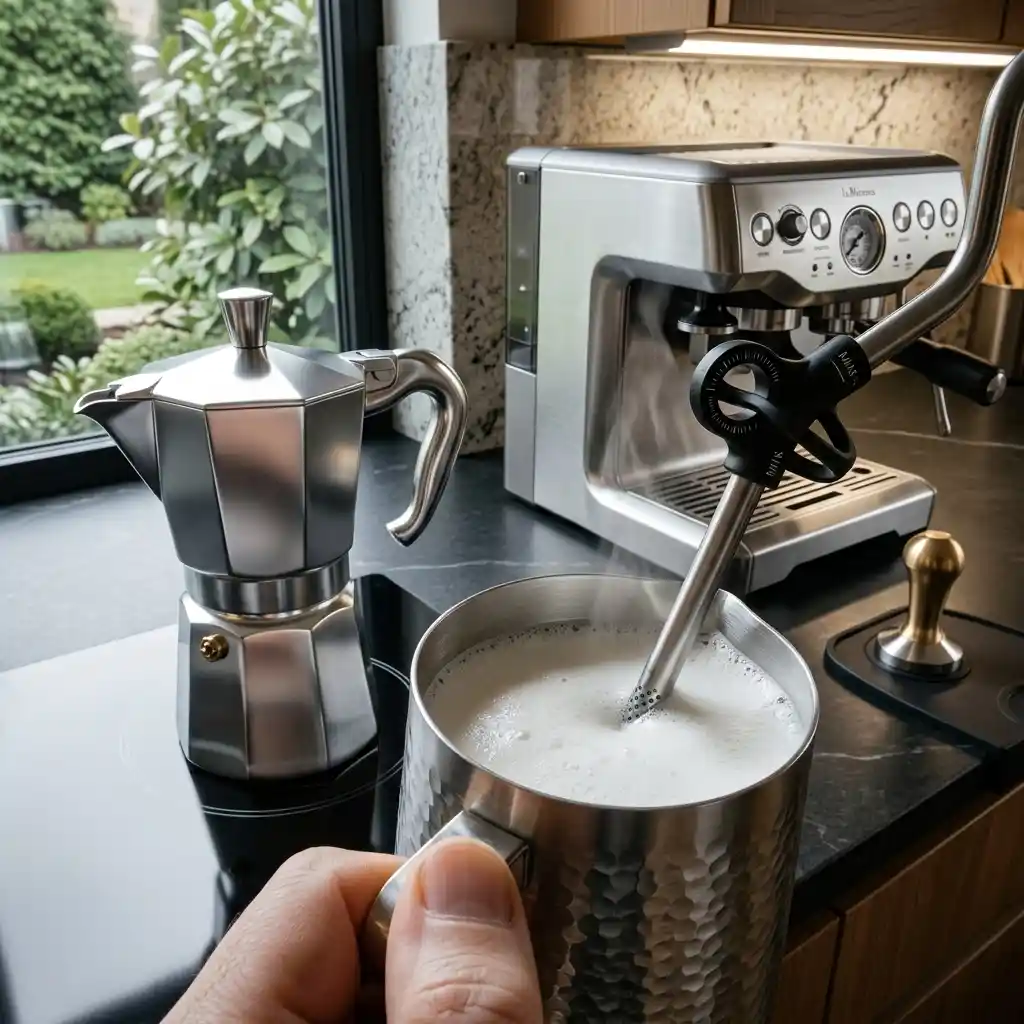
Daily use shows the espresso maker vs espresso machine gap quickly. Milk drinks favor a machine. For instance, a steam wand creates glossy microfoam for lattes and flat whites. However, you can still make a decent latte with a moka pot, because a handheld frother works well. Cleaning also differs. A moka pot needs a quick rinse and a new gasket every year or two. A machine, on the other hand, needs backflushing, a wiped group head, a purged steam wand, and periodic descaling. For more routines, read our guide to making café-style coffee at home.
Common Buying Mistakes to Avoid
Avoid these slips when weighing an espresso maker vs espresso machine. Most come down to specs and habits.
- Trusting the product name instead of the pressure rating when you compare an espresso maker vs espresso machine
- Skipping the grinder, which hurts both flavor and consistency
- Expecting café shots from a very cheap machine
- Running a moka pot on high heat
- Forgetting counter space, cleanup time, and descaling
- Buying a super-automatic when you enjoy hands-on brewing
Frequently Asked Questions
Pressure: Brews at 1–2 bars (espresso requires ~9 bars).
Crema: Cannot produce authentic espresso crema.
Result: A strong, highly concentrated coffee at a lower cost than a pump machine.
Verdict: Belongs on the “maker” side of the stovetop espresso debate.
Standard Pressure: 9 bars (~130 psi) extracted in 25–30 seconds.
Key Benefit: Essential for building authentic crema.
Buying Tip: Choose a pump-driven machine that explicitly lists this spec.
Yes, a quality grinder matters a lot. Espresso needs a fine, consistent grind, and stale pre-ground coffee usually tastes flat. However, pod and super-automatic models reduce that need. They use sealed capsules or grind the beans for you. For the espresso maker vs espresso machine decision, a grinder helps on both sides.
Yes, you can. Brew a strong pot, then froth warm milk with a handheld frother. The drink will taste good. However, the texture will not match steam-wand microfoam. Besides that, the coffee is less intense than an espresso shot. Therefore, daily latte drinkers often prefer a machine.
Be cautious below about $200. Many budget models use pressurized baskets and weak temperature control. As a result, shots rarely beat a good moka pot by much. If your budget is small, a moka pot plus a decent grinder often wins. Genuine entry-level machines usually start near $300.
Final Summary: Espresso Maker vs Espresso Machine
The espresso maker vs espresso machine choice comes down to pressure, budget, and effort. First, choose a moka-style maker for simple, bold coffee at a low price. Second, choose a pump-driven machine for crema, milk drinks, and hands-on craft. Whatever you pick in the espresso maker vs espresso machine contest, fresh beans matter as much as hardware. Meanwhile, prefer a classic brewed cup? Our Cuisinart DCC-3200 review and Ninja coffee maker review cover reliable options.
Keep Reading
Compare drip, pod, and espresso options beyond the espresso maker vs espresso machine choice.